 how-to
How to Choose Wall Art for Modern Apartments
Table of Contents
- Start With the Room, Not the Frame
- How to Choose the Right Size Wall Art
- Match the Art Style to Your Modern Apartment
- Gallery Wall Layout Ideas That Work in Small Spaces
- Large Wall Art Ideas for Apartments With Big Blank Walls
- How to Choose Art for a Living Room
- Hang, Light, and Protect Your Wall Art Without Losing a Deposit
- Frequently Asked Questions
Last Updated: October 18, 2026
Start With the Room, Not the Frame
Read the room first. We tell buyers to note three things before browsing: wall space, natural light, and existing colors.

Wall art is the fastest way to make a rental feel like yours. It hides blank drywall, adds texture, and gives a modern apartment a finished look.
Below, we cover sizing, style, layout, hanging, and protection, so you can choose once and get it right.
How to Choose the Right Size Wall Art
The right size wall art covers about 60 to 75 percent of the wall width above a piece of furniture. Undersized art is the most common apartment mistake and makes a room feel unfinished.
Measure the wall, not the frame you like. Then match the art to the anchor below it.
- Above a sofa: art should span two-thirds of the sofa width
- Above a bed: one large piece or a pair, centered on the headboard
- On a narrow wall: a tall vertical print beats a wide one
Scale matters more in small apartments, not less: one large print reads calmer than five small frames crowded together.
Match the Art Style to Your Modern Apartment
Modern apartment interiors reward restraint. Sleek lines, neutral walls, and open floor plans call for artwork that adds interest without clutter.
Start with your existing style, not a trend.
Here is how the main formats compare:
| Format | Best For | Rental-Friendly | Notes |
|---|---|---|---|
| Framed prints | Flexible styling, easy swaps | Yes, with removable hooks | Lightweight, easy to move |
| Canvas prints | Large blank walls | Yes, no holes needed with adhesive strips | No glare, no glass |
| Framed canvas | A polished, gallery look | Yes | Adds depth and weight visually |
| Posters | Budget setups, quick changes | Yes | Needs a frame to look finished |
| Original artwork | Collectors, statement pieces | Depends on size | One-of-a-kind, higher cost |
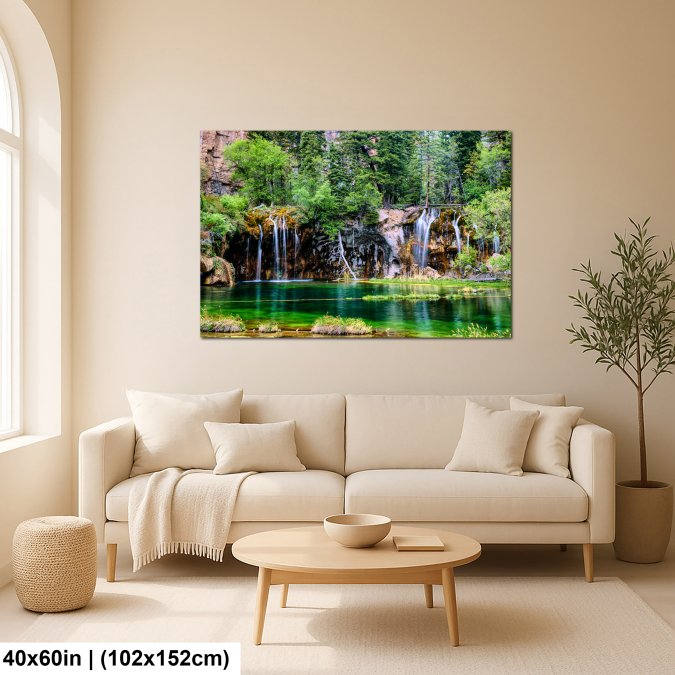
Photography suits modern apartments especially well: a single large landscape or cityscape print brings calm and depth without demanding a bold color scheme, and black-and-white photography complements almost any neutral palette.
Gallery Wall Layout Ideas That Work in Small Spaces
A gallery wall can work in a small apartment, but only with a plan. Random clusters look messy fast. Pick one layout, mark it on the wall, and keep the spacing consistent.
Four layouts that hold up in tight rooms:
- The grid. Equal-size frames in even rows. Clean, modern, and the easiest to hang straight.
- The center line. One large anchor piece with smaller frames balanced around it.
- The shelf ledge. A picture ledge lets you lean frames and swap art without new holes. Ideal for renters.
- The vertical stack. Two or three frames stacked tall on a narrow wall.
Keep 2 to 3 inches between frames. Cut paper templates to each frame's size and tape them to the wall first, this one step prevents most hanging regrets.
Large Wall Art Ideas for Apartments With Big Blank Walls
A big blank wall is an opportunity, not a problem, but only if you size the piece to the wall before you fall for an image. The most common failure is art that is technically big but still too small, leaving the wall emptier than before.
Size the piece to the wall, not to the frame you like
For a single statement piece on a large wall, the art should cover roughly 60 to 75 percent of the wall width, or two-thirds of the furniture width below it, whichever is smaller.
Height matters too: leave 6 to 10 inches between the frame bottom and the furniture, and keep the center at eye level. On a tall wall, a vertical piece or stacked pair fills height a single wide print leaves bare.
Four large-wall formats and when each wins
- A single panoramic print. Best for a long living room wall above a sofa. One wide piece reads calm and modern and is usually cheaper to frame than three separate frames. The trade-off: it is heavy and awkward to move.
- A multi-panel piece (two or three panels). Fills width without one heavy frame, and each panel is lighter and easier to pack. Panels must hang as a set with consistent gaps, 2 to 3 inches is typical, or the piece looks broken. Measure the total assembled width, not each panel, when sizing to the wall.
- A tall vertical piece. Works beside a doorway, at the end of a hallway, or on a narrow wall where a wide print would crowd the edges. A vertical cityscape or tall abstract anchors a slim wall that would otherwise stay blank.
Make one large wall work across an open-plan layout
Open-plan apartments create a specific problem: living, dining, and kitchen zones share sightlines, so art chosen for one zone is visible from the others. The goal is cohesion without repetition, a thread that ties the zones together while each area keeps its character.
A practical approach:
- Pick one connective element, a color, a subject category (landscape, cityscape, abstract), or a frame finish, and repeat it across zones. A single warm tone pulled from the living room art can reappear in a smaller dining piece.
- Vary scale by zone. The living room earns the largest piece because it is the primary viewing area. The dining zone takes a smaller piece or a pair. The kitchen wall, often seen at an angle, can take a single medium print rather than a cluster.
- Keep the center line consistent. If the living room art centers at 57 to 60 inches, the dining and kitchen pieces should center at the same height, so the eye reads one horizontal line across the open space.
- Don't repeat the same image. Repeating an identical print in two zones reads as a hotel corridor. Repeat the palette or the frame, not the picture.
Watch the light on large walls
Large walls are often the brightest, facing windows or sitting under high ceilings, and a large piece amplifies glare. Canvas handles glare better because there is no glass. If the wall gets direct sun, choose a matte finish, consider UV-filtering glazing, or move the piece to softer indirect light.
How to Choose Art for a Living Room
Living room art should anchor the seating area and match the room's mood.
Start with the sofa: choose art spanning about two-thirds of its width, hung 6 to 10 inches above the back.
For a calm, serene living room, landscape and nature photography works well.
- Warm tones (rust, amber, sand) make a cool room feel cozier
- Cool colors (blue, gray, green) calm a bright, busy space
- High contrast adds energy; soft contrast adds calm
Consider how the room is used: a living room that doubles as a home office needs quieter pieces that support focus.
Hang, Light, and Protect Your Wall Art Without Losing a Deposit
Renters can hang art without losing a security deposit, but the margin for error is smaller than most guides admit. The work splits into four decisions: hardware, planning holes, light, and move-out.
Choose hardware by weight, not by habit
Adhesive strips are the default rental answer, but they fail because people underestimate frame weight. A 24-by-36-inch framed print with glass and a solid wood frame commonly lands in the 10-to-20-pound range, and larger pieces go higher.
A practical hierarchy for apartment walls:
- Lightweight unframed prints and posters (under about 5 pounds): adhesive strips or a picture ledge.
- Framed prints with glass (roughly 5 to 20 pounds): adhesive strips rated well above the frame weight, or a single nail or screw into a stud.
- Canvas and multi-panel pieces (often 5 to 15 pounds per panel): adhesive strips work well because there is no glass and each panel is light; distribute the load across the panel back.
Check the lease before you buy hardware. Many leases prohibit nails and screws outright, some allow small picture hooks, and a few require written approval for anything mounted.
Plan every hole before you make one
A hanging plan is cheaper than a patch kit. Tape paper templates cut to each frame's exact outer dimensions to the wall, stand back, and photograph the arrangement. Adjust until spacing and center line look right, then mark the hanging points through the paper.
A few measurements that prevent most regrets:
- Center line: the middle of the artwork, or the middle of the whole arrangement, at roughly 57 to 60 inches from the floor. This is the museum-standard eye level and it holds whether the ceiling is 8 or 10 feet.
- Above furniture: 6 to 10 inches between the bottom of the frame and the top of the sofa or headboard, so the art reads as connected to the furniture rather than floating.
- Between frames: 2 to 3 inches for a tight, modern grid; 3 to 4 inches if the frames are large and the wall is wide.
Use a level on every piece, even in a grid. Walls and ceilings are rarely perfectly true, so trust the level over the ceiling line.
Control light before it controls the art
Daylight is the biggest variable in an apartment: it changes how colors read and, over years, fades pigments. Direct sun on a framed print creates glare and accelerates fading; canvas avoids glare but still fades under strong UV.
Practical moves:
- Keep framed prints off walls that take harsh afternoon sun, or rotate pieces seasonally so no single print absorbs years of direct light.
- Choose matte or satin finishes over high-gloss for walls near windows; gloss reflects more and shows every fingerprint.
- If a piece must live in bright light, ask about UV-filtering glazing or acrylic when framing. Conservation-grade glazing costs more but slows fading.
Protect the deposit at move-out
Small nail and screw holes are typically patched with lightweight spackle, sanded smooth, and touched up with matching paint, a job most renters can do in an afternoon.
Keep a small move-out kit: spackle, a putty knife, fine sandpaper, a paint sample matched to the wall, and a dry cloth. Photograph the walls before you hang anything and again after patching, so you have a record if the deposit is questioned.
Frequently Asked Questions
How do I choose the right size wall art for an apartment?
Measure the wall first, then aim for art that covers roughly 60 to 75 percent of the width of the furniture below it. A sofa that is 84 inches wide pairs well with a piece or grouping around 50 to 63 inches across. Leave at least 8 to 10 inches of breathing room between the art and the ceiling or furniture. In small apartments, one larger piece usually looks calmer and more deliberate than several small frames scattered across the same wall.
Should wall art match the furniture or the room's color scheme?
Neither has to match exactly. Pick up one or two colors already present in the room, such as a tone from your rug, cushions, or wood furniture, and let the art add contrast elsewhere. A neutral apartment with gray and white furniture can carry a warm-toned landscape or a deep blue cityscape without clashing. The goal is visual balance, not a perfect color match, so treat the room's palette as a guide rather than a rule.
How can I hang wall art in a rental without damaging the walls?
Removable adhesive strips and hooks are the standard rental-friendly option for prints and lightweight framed pieces, and they come off without leaving holes when removed correctly. Follow the weight rating on the packaging and clean the wall before applying. For heavier frames, use a slim picture ledge shelf that rests on adhesive pads or a leaning arrangement on a console table. Always check your lease terms before installing anything.
How do I arrange a gallery wall in a modern apartment?
Lay the frames on the floor first and photograph the arrangement before touching the wall. Keep a consistent gap of about 2 to 3 inches between frames, align the center of the grouping at roughly 57 inches from the floor, and anchor the layout to a piece of furniture so it reads as one unit. Mix one large focal print with smaller supporting pieces, and keep the frame finish consistent to avoid a cluttered look in a small room.