 how-to
How to Protect Photography Prints From Fading
Table of Contents
- Why Photography Prints Fade: Light, Heat, and Humidity
- How to Prevent Photos From Fading in Sunlight
- UV-Protective Glass for Photo Prints: What Actually Works
- How to Frame Photography Prints to Block Light Damage
- The Best Way to Store Photo Prints When They Are Not on Display
- Print-Specific Care: Inkjet, Dye-Sublimation, Thermal, and Instant Film
- Preventive Care for Prints That Are Already Fading
- Conclusion: Building a Long-Term Preservation Routine
- Frequently Asked Questions
Last Updated: October 9, 2026
Why Photography Prints Fade: Light, Heat, and Humidity
Learning how to protect photography prints from fading starts with understanding what actually damages them. Fading is the gradual loss of color and contrast in a print, caused by light, heat, and moisture working together over months and years.
Three forces do the damage:
- Light exposure, especially ultraviolet (UV) light from sun and bulbs
- Heat, which speeds up every chemical reaction in the paper and ink
- Humidity, which softens paper fibers and invites mold
Remove or reduce any one of these and you slow the clock considerably.
How UV Light Breaks Down Colorants
UV light carries enough energy to break the chemical bonds inside colorants. Once those bonds snap, the color is gone for good. You cannot restore it.
Researchers studying digital print damage found that UV-filtering glass protected prints from colorant fading, paper yellowing, and changes in paper gloss, at least to some extent (study on light-induced damage in digital prints).
How to Prevent Photos From Fading in Sunlight
The fastest way to prevent photos from fading in sunlight is to keep direct sun off the print entirely. Sunlight is the single most destructive force in any room. A print that faces a bright window will change faster than one on an interior wall.
Placement Rules for Bright Rooms
Choose walls the sun never hits directly. In most homes, that means:
- Interior hallway walls
- Walls perpendicular to windows, not facing them
- Stairwells and corridors with indirect light
For rooms that get strong light, rotate prints every few months. Store the ones not on display in the dark. This spreads the exposure across your collection instead of burning one piece.
UV-Protective Glass for Photo Prints: What Actually Works
UV-protective glass for photo prints blocks most of the ultraviolet spectrum while letting visible light through. It is the most effective single upgrade you can make to a framed piece. The catch is that glass only protects what sits behind it, so unframed prints need a different plan.
Glass vs. Acrylic vs. Coatings vs. Sleeves
Each option trades cost, weight, and clarity differently.
| Option | Protection Level | Best For | Watch Out For |
|---|---|---|---|
| UV-filtering glass | High | Framed display pieces | Heavy, can break in shipping |
| UV-filtering acrylic | High | Large prints, rentals | Scratches easily |
| Spray coatings | Low to medium | Unframed canvas | Uneven coverage over time |
| Protective sleeves | Medium | Stored prints | Not for wall display |
Glass and acrylic both do the heavy lifting. Coatings and sleeves are backup, not replacements.
How to Frame Photography Prints to Block Light Damage
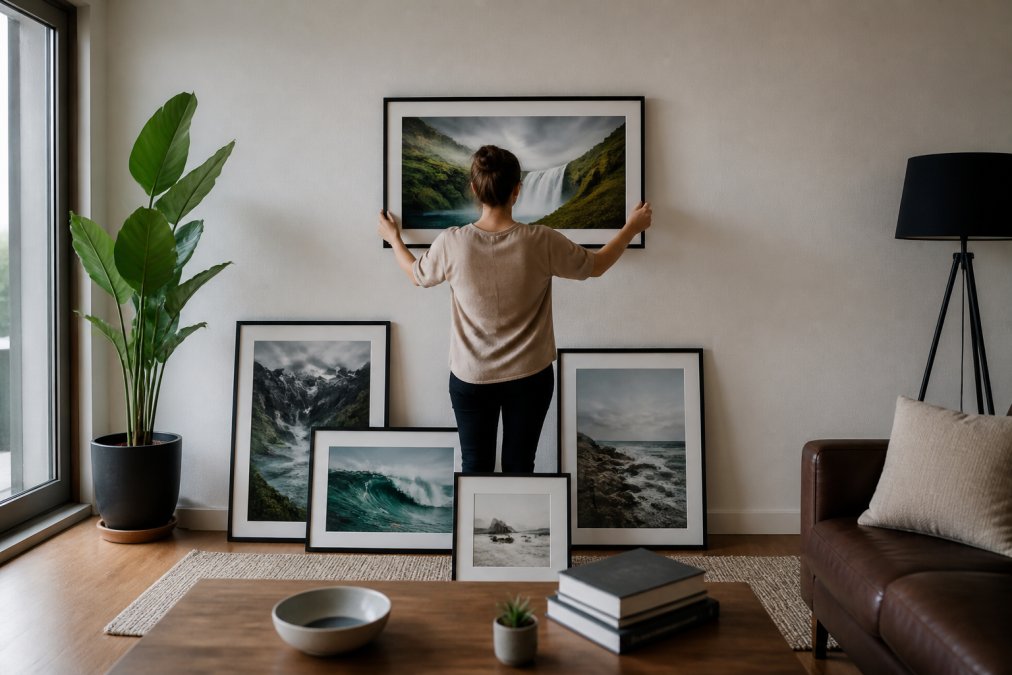
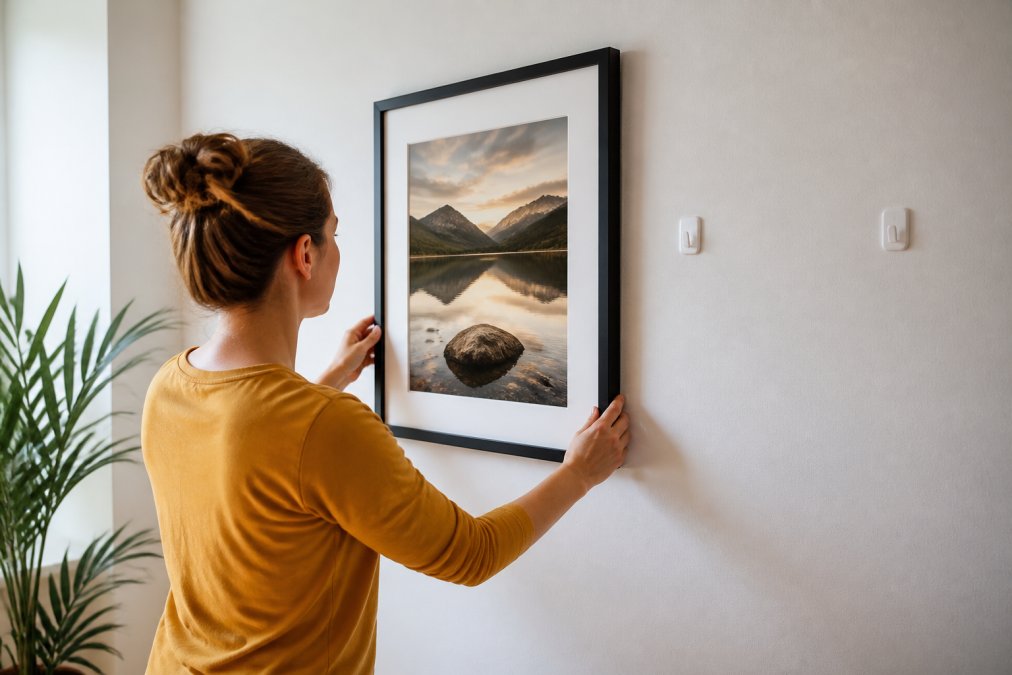
Framing is where most fading prevention actually happens. A proper frame seals the print away from air, moisture, and light in one step. Get it right and the print is protected for years.
Here is the order we would follow:
- Choose UV-filtering glass or acrylic for the glazing
- Add an acid-free mat so the print never touches the glass
- Use acid-free backing board behind the print
- Seal the back with framing tape to block dust and damp
- Hang away from direct sun and heat sources
The mat matters more than people expect. It creates an air gap, which stops condensation from forming on the print surface.
The Best Way to Store Photo Prints When They Are Not on Display
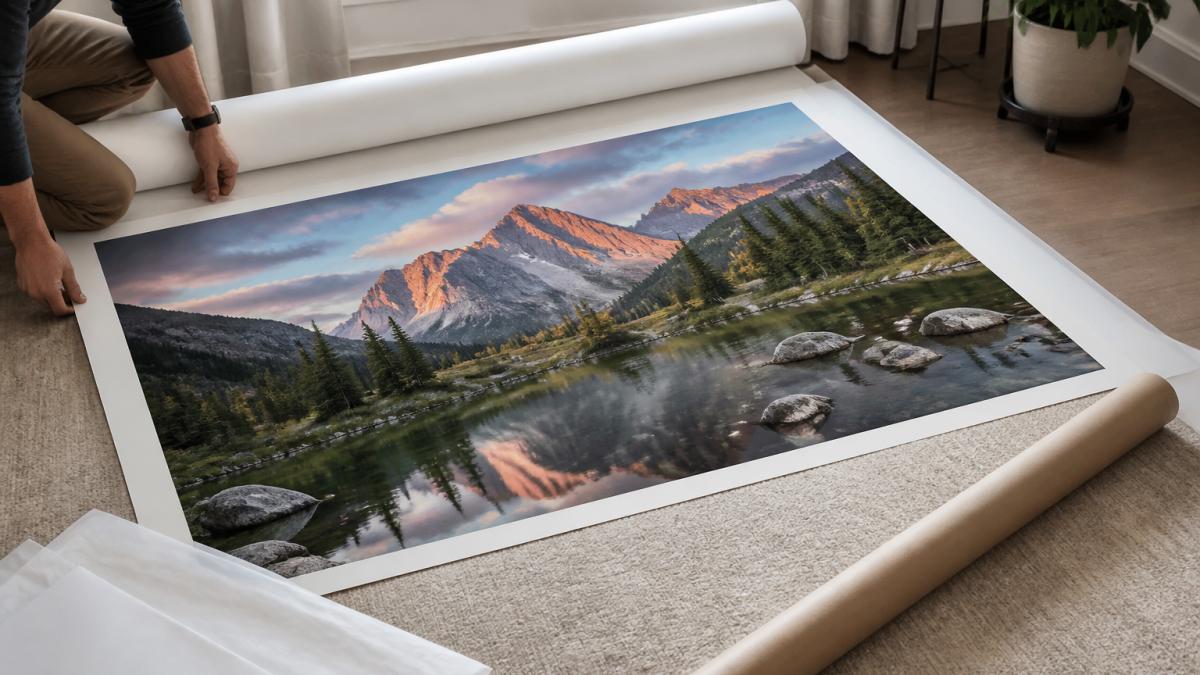
The best way to store photo prints is in the dark, in a cool, dry place, inside materials that pass archival standards. Light, heat, and humidity keep working on stored prints, just more slowly. The difference between a print that survives thirty years in a box and one that yellows in five usually comes down to the enclosure materials, not the room.
Start with the environment:
- Target a stable range of roughly 65-70°F with relative humidity between 30% and 50%. Big swings matter more than any single reading.
- Avoid basements and attics, which swing between damp and hot and are the two worst rooms in most homes.
- Keep boxes and albums off concrete floors and away from exterior walls, where moisture migrates through the slab.
What 'Archival' Actually Means
"Archival" is a marketing word, not a regulated one. The terms that carry real meaning are acid-free, lignin-free, buffered, and photo-safe. Here is how to read them:
- Acid-free means the material has a neutral or slightly alkaline pH, so it will not donate acid to the print. Most paper and board made from wood pulp is acidic unless it has been treated.
- Lignin-free matters because lignin is the natural polymer in wood that breaks down into acidic compounds over time. Papers sold as "archival" or "conservation grade" are lignin-free; newsprint and most kraft paper are not.
- Buffered means the board or paper contains an alkaline reserve, typically calcium carbonate, that neutralizes acids as they form. Buffered board is standard for paper-based photographs but is not recommended for certain protein-based materials like some older albumen prints, which prefer a neutral pH.
Choosing Albums, Boxes, and Sleeves
Match the enclosure to how often you handle the print:
- Albums are for prints you look at. Choose albums with acid-free, lignin-free pages and either polyester or polypropylene sleeves. Avoid magnetic or self-adhesive albums entirely, the adhesive eventually migrates into the print.
- Archival boxes are for long-term storage. Look for boxes made from buffered, lignin-free board with a snug lid. Metal-edge boxes give more rigidity for large or heavy collections.
- Sleeves and envelopes are for individual prints. Polyester (often sold as Mylar or Melinex) is the gold standard: chemically inert, crystal clear, and stable for decades. Polyethylene and polypropylene are cheaper and acceptable for most storage. Skip PVC entirely, it off-gasses hydrochloric acid and plasticizers that stain and embrittle prints.
Labeling and Handling
Write on the enclosure, never on the print. Use a soft pencil on the back of a sleeve or a label on the outside of a box. Handle prints with clean, dry hands or cotton gloves, and support the print from underneath with both hands, bending a print is how corners crease and emulsions crack. Every time you pull a print out of storage, you spend a little of its life, so handle it as rarely as the collection allows.
Print-Specific Care: Inkjet, Dye-Sublimation, Thermal, and Instant Film
Not all prints fade the same way, and the reason comes down to chemistry. The colorant, dye or pigment, and the way it sits on or in the paper determine how fast light, heat, and humidity break it down. Care should match the print type, and this is the part most guides skip.
Inkjet Prints
Inkjet covers two very different products:
- Dye-based inks dissolve colorant in a liquid carrier. The dye sits near the surface of the coating, where light and airborne pollutants reach it easily. Dye prints fade faster, especially in the magenta and cyan channels, and are the most light-sensitive common print type.
- Pigment inks suspend solid colorant particles. Pigments are far more lightfast and are the standard for fine art and archival printing. They still fade, but the timeline is measured in decades under reasonable conditions rather than years.
For both, the priorities are UV-filtering glazing, an acid-free mat, and keeping the print out of direct sun. Dye prints in particular should never hang in a bright room without glazing.
Dye-Sublimation Prints
Dye-sublimation (dye-sub) transfers dye into a special coating on the paper, so the colorant sits inside the surface rather than on top of it. That construction makes dye-sub prints more resistant to handling, moisture, and abrasion than a typical inkjet print. The weak point is heat: dye-sub images can shift or blur if they get hot, so keep them away from radiators, car dashboards, and hot storage areas.
Thermal Prints
Thermal prints, the kind produced by many receipt printers, label makers, and some instant photo devices, form an image when heat activates a coating on the paper. That same heat can erase or darken the image later. Thermal prints are the most fragile common type: they fade quickly with light, heat, and even friction, and many are not designed for long-term display at all.
Instant Film and Polaroid Prints
Instant film prints have a plastic or coated surface and a developing chemistry that keeps working for a short time after exposure. They are sensitive to light, heat, and humidity, and they can be damaged by the same plasticizers that attack other prints. Frame them behind UV-filtering glazing with an acid-free mat, or store them flat in the dark in a photo-safe sleeve.
A Quick Decision Guide
- Fine art pigment inkjet: UV glazing, acid-free mat, avoid direct sun. The most forgiving type.
- Dye-based inkjet: Treat as high-risk. Glaze, rotate, and keep out of bright rooms.
- Dye-sublimation: Protect from heat first, light second.
If you are not sure what you have, ask the print shop or the photographer. The answer changes how you store it, how long you can display it, and whether it is worth framing at all.
Preventive Care for Prints That Are Already Fading
A print that is already fading is not lost, but you need to act. Move it out of the light first. Then decide whether to keep displaying it or retire it to storage.
Steps we would take:
- Photograph the print now, in good light, as a record
- Move it to a dark, cool spot
- Reframe it with UV-filtering glazing if you want it back on the wall
- Scan it at high resolution for a digital backup
- Order a fresh print for display, and store the original
That last step is the honest one. A faded print will not recover. A reproduction keeps the image alive.
Conclusion: Building a Long-Term Preservation Routine
Fading is slow, which is exactly why it catches people off guard.
Check your display spots for direct sun each season. Rotate pieces that sit in bright areas. Store the rest in acid-free boxes in a cool, dark room.
At LarryCoulsonPhoto, we offer a curated collection of fine art photography prints, featuring stunning landscape, cityscape, nature, travel, and abstract imagery.
Frequently Asked Questions
Does UV-protective glass actually prevent photographs from fading?
UV-filtering glazing blocks most ultraviolet light, which is the primary cause of colorant fading in displayed prints. A 2016 study on digital print preservation found that UV-filtering glass protected prints from colorant fading, paper yellowing, and gloss changes to some extent. However, UV glass does not block visible light, so prints in very bright rooms will still fade slowly. Combine UV glazing with indirect lighting and rotate displayed pieces every few months for the best results.
What is the best way to store photo prints to keep them from fading?
Store prints in acid-free archival boxes or albums in a cool, dry, dark space. Ideal conditions are below 75°F with relative humidity between 30% and 50%. Use acid-free interleaving paper between prints, avoid plastic containers that trap moisture, and never store prints in attics, basements, or garages where temperature and humidity swing widely. Proper dark storage can extend print longevity significantly compared to leaving prints exposed to light and heat.
Can you restore sun-faded photos?
Fading is a chemical change in the colorants, so the original print cannot be fully restored. You can improve appearance through digital restoration: scan the print at high resolution, then use editing software to correct color shifts and recover contrast. For valuable or sentimental prints, a professional photo restoration service can do more detailed work. The best defense is prevention. Once a print fades, digital reproduction from the original file is the most reliable path to a fresh copy.
Does the type of print affect how quickly it fades in sunlight?
Yes. Inkjet prints with pigment-based inks resist fading far better than dye-based inks. Dye-sublimation and thermal prints vary widely in light stability depending on the paper and ribbon used. Instant film prints like Polaroids are among the most light-sensitive and should be stored in albums or displayed behind UV glass away from direct sun. Knowing your print type helps you choose the right protection level.