 how-to
Visualizing Art in Home Before Buying: A 2026 Guide
Table of Contents
- Why Visualizing Art in Home Before Buying Matters
- The Wall Art Sizing Guide: Getting Scale and Proportion Right
- The Tape and Paper Method: A Low-Tech Way to Preview Art
- Best Apps to Visualize Art on Walls in 2026
- How to Curate a Gallery Wall That Feels Balanced
- Common Visualization Mistakes and How to Fix Them
- Frequently Asked Questions
Last Updated: September 21, 2026
Why Visualizing Art in Home Before Buying Matters
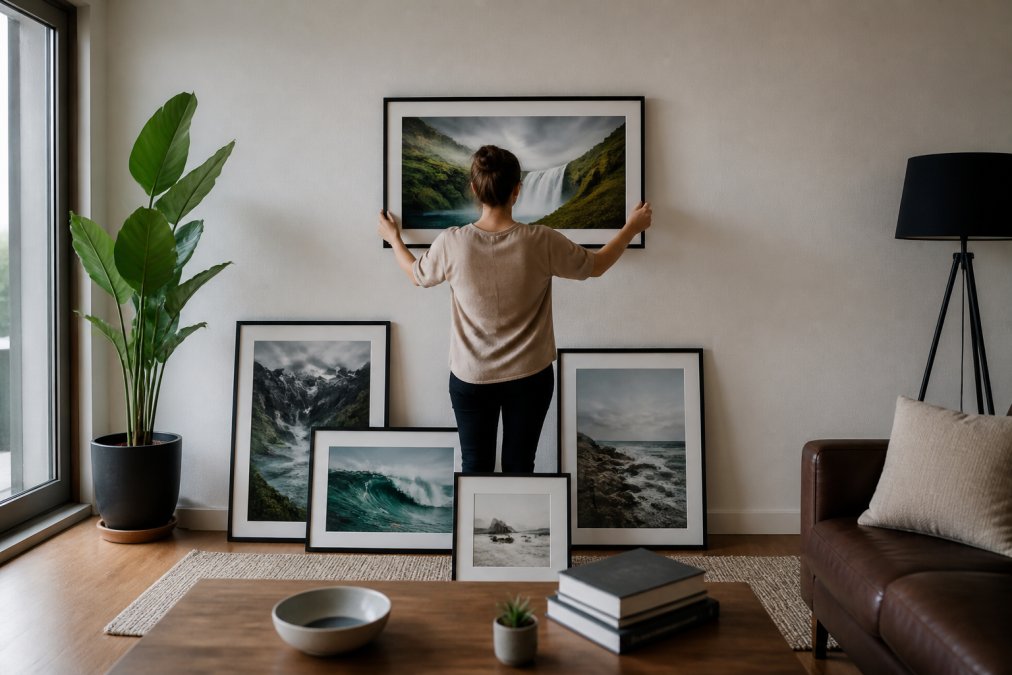
The global wall art market hit $70.94 billion in 2026 and is projected to reach $145.49 billion by 2034, according to Fortune Business Insights' wall art market report. That spending power comes with a problem: a print that looks stunning on a screen can feel completely wrong once it's on your wall. This guide from LarryCoulsonPhoto covers visualizing art in your actual space before you commit, so the piece you order is the piece you keep.
A 2026 ReimagineHome.ai study found that homebuyers now prioritize realistic staging, with AI-driven visualization reducing purchase uncertainty. Wall art works the same way: scale, proportion, and lighting decide whether a piece feels intentional, and none of those factors show up in a thumbnail.
Below, we'll walk through the sizing rules, the tape method, the best apps to visualize art on walls, and the mistakes that ruin good placements. Digital tools are a starting point, not a verdict, physical checks still catch what pixels miss.
The Wall Art Sizing Guide: Getting Scale and Proportion Right
A wall art sizing guide starts with one number: 60 to 75 percent of the furniture width below it. That's the range where art feels anchored to a sofa, console, or bed instead of floating above it.
The 2/3 Rule for Wall Coverage
The 2/3 rule says artwork should cover roughly two-thirds of the wall space above a piece of furniture. For a 72-inch sofa, aim for art spanning 43 to 54 inches.
Three practical checks before you buy:
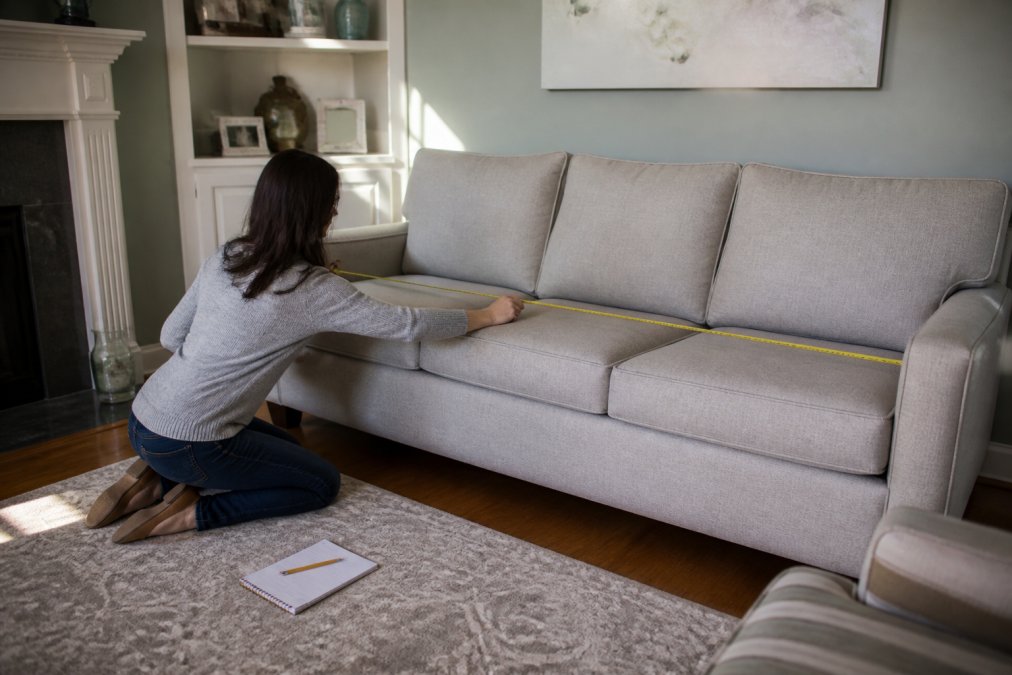
- Measure the furniture width, then multiply by 0.6 and 0.75 to get your target range
- For gallery walls, keep total coverage within the same 2/3 band
- Leave at least 6 to 8 inches between the art's bottom edge and the furniture top
Oversized art is the dominant 2026 trend, per Magnetic Art's wall art statistics. That makes sizing discipline more important, not less. Large-format pieces amplify every proportion error.
The Tape and Paper Method: A Low-Tech Way to Preview Art
The tape and paper method is the most reliable free way to preview art: cut paper to the exact print dimensions, tape it to the wall, and live with it for a few days to catch scale errors apps miss.
Here's the process:
- Note your print's exact dimensions, including any mat and frame
- Cut newspaper or kraft paper to those dimensions
- Tape the outline at your planned hanging height
- Step back 8 to 10 feet and assess the visual weight
- Leave it up for 48 hours before deciding
Why bother when AR apps exist?
Best Apps to Visualize Art on Walls in 2026
The best apps to visualize art on walls use augmented reality to place a scaled digital version of a print on your actual wall through your phone camera, answering the biggest pre-purchase question: how will this look in my room?
- True-to-scale rendering. The app must let you enter exact print dimensions, not just drag a resizable image.
- Accurate lighting simulation. Look for tools that account for your room's lighting temperature, since warm bulbs shift how colors read.
- Wall texture awareness. A print on brick, plaster, and drywall reflects light differently.
Most major print sellers now offer on-wall preview.
What to Check Before You Trust a Digital Mockup
Digital mockups get scale right but color wrong: screen calibration, ambient lighting, and camera processing all distort how a print will look. Treat the app as a layout tool, not a color proof.
- Confirm the app used your exact print dimensions, not a default
- Compare the mockup against a paper template at the same size
- Check the print's color profile against your room's lighting
- Request a physical sample if the piece is a significant investment
How to Curate a Gallery Wall That Feels Balanced
Learning how to curate a gallery wall means treating the group as one composition, not a collection of individual pieces. Balance, spacing, and a consistent visual thread matter more than any single print.
A few rules that hold up in practice:
- Limit the palette to two or three dominant colors across all pieces
- Mix horizontal and vertical aspect ratios to avoid monotony
- Repeat one element (frame color, subject type, or tone) to create aesthetic cohesion
Gallery Wall Scale: The Ratio Most Guides Skip
The 60-to-75-percent rule that governs a single piece also governs a gallery wall, but the math works differently. Measure the full width of the furniture below the group, then size the entire arrangement, not each frame, to that band. Above a 72-inch sofa, the total gallery footprint should span roughly 43 to 54 inches. Sizing each frame on its own leaves the assembled group floating above the sofa like a postage stamp.
Art-to-Furniture Ratios by Anchor Type
The furniture below the art sets the scale, and different anchors call for different targets:
- Above a sofa (60-72 inches wide): total art width of 43 to 54 inches, bottom edge 6 to 8 inches above the backrest
- Above a console table (48-60 inches wide): total art width of 29 to 45 inches, bottom edge 6 to 8 inches above the tabletop
- Above a bed (queen, 60 inches wide): total art width of 36 to 45 inches, bottom edge 8 to 10 inches above the headboard
- Above a desk or dresser (36-48 inches wide): a single piece or tight pair, total width of 22 to 36 inches
Integrating Art With Existing Furniture and Color
Art should respond to the room, not compete with it. Pull one or two colors from your existing furniture or textiles and let the artwork echo them, a landscape print with muted greens sits naturally with olive upholstery but fights bright primary colors.
The Psychological Angle: How Placement Changes Room Mood
Most guides stop at mechanics, but placement also shapes how a room feels. Art centered around 57 to 60 inches reads as calm and intentional, suiting living rooms and bedrooms. Art hung higher pulls the eye upward, making a room feel taller but less grounded, useful with low ceilings, distracting with high ones.
Common Visualization Mistakes and How to Fix Them
Most visualization errors trace back to a handful of causes, each with a straightforward fix. Catching them before you order saves return shipping and wall repair.
| Mistake | Why It Happens | The Fix |
|---|---|---|
| Wrong scale | Judging size from a thumbnail | Apply the 2/3 rule with real measurements |
| Wrong hanging height | Defaulting to eye level | Mark 57-60 inches to center, then test |
| Color mismatch | Trusting screen rendering | Verify with a paper or physical proof |
| Poor lighting fit | Ignoring room lighting temperature | Check the print under your actual bulbs |
AR-Specific Errors No One Warns You About
Augmented reality apps solve the layout problem but introduce their own failure modes, the ones that show up most often, and that standard guides skip.
Low-Tech Troubleshooting for Non-Tech Users
If AR apps feel intimidating, the paper template method catches every error the apps do, and a few they miss. The trade-off is time, not accuracy.
Run this low-tech checklist before you buy:
- Cut paper to the exact print dimensions, including mat and frame
- Tape it at your planned hanging height, measured to the center
- Step back 8 to 10 feet and check the scale against the furniture below
- View it at different times of day to see how natural and artificial light change it
- Leave it up for 48 hours before deciding
Frequently Asked Questions
What is the 2/3 rule for wall art?
The 2/3 rule means the art should cover about two-thirds of the width of the furniture below it, such as a sofa or console. For a 72-inch sofa, aim for art around 48 inches wide. This ratio keeps scale and proportion balanced so the piece feels intentional rather than undersized or overpowering. It works for single oversized art and for gallery wall groupings measured as a whole.
How do I know if a piece of art will fit my wall space?
Measure the wall width and height, then subtract at least 6 to 12 inches of breathing room on each side. For art above furniture, keep 6 to 10 inches between the bottom of the frame and the furniture top. Hang at eye level, roughly 57 to 60 inches from the floor to the center of the piece. Tape and paper mockups confirm the fit before you commit.
What are the best apps to visualize art on walls?
Augmented reality apps let you point your phone at a wall and see a print at true scale. Look for tools that support custom frame dimensions, aspect ratio adjustments, and room lighting previews. Digital mockup tools on artist websites also help, since you can upload a photo of your wall. Pair any app preview with a physical tape mockup, because screens can distort texture and color depth.
I'm renting and can't put holes in the walls. How can I still visualize art before buying?
Lean oversized prints on a console or shelf to test placement. Tape and paper mockups work perfectly without any hardware. Photograph your wall, then drop the print image into a mockup tool to check scale and composition.